QUEER SAINTS

A Note About Traditional Saints

When I was a kid in elementary school, the saints were always hanging around. In fact, at least one saint was celebrated—or, at the least, discussed—every day. That makes sense if you’re a student attending a Catholic school because in Roman Catholicism, there’s at least one saint for every single day of the year.

I don’t remember a time when I didn’t know who Saint Francis of Assisi was. The nuns who educated me loved telling Saint Francis’s story—a story about a young man who wanted to give his life to the service of the poor, to loving nature and her animals, and to preaching the gospel. And Saint Francis started on his spiritual path not by kneeling in a church or spending days in solitude, but by stripping down to his birthday suit! It was crazy and wild, but Francis was deeply passionate about his vision of serving God—and what it meant to serve the people of God. When Saint Francis looked at someone, he saw a soul, not a person, and his perception transcended the rigid structures of gender. That was revolutionary in itself. But Francis didn’t care who might’ve been offended or angered by his compassionate view of the world. He didn’t care that tearing off his clothes in front of unsuspecting passersby might embarrass his family and friends. He didn’t care that people might start every conversation about him with the words, “That guy is crazy!” And he certainly didn’t care about what was considered “normal” or “proper” in society and the world around him. Nor did he care what was expected of him personally. He railed against every one of those rules, ideas, perceptions, images and expectations.

This is precisely what makes Saint Francis a queer saint.

We can find the same current of revolutionary energy in Saint Hildegard of Bingen, Saint Joan of Arc, Sor Juana de la Cruz, Saint Marinos, and Saint Sebastian. We can also see it in Publick Universal Friend. Unlike the majority of modern/folk saints, we will never know definitively if any traditional saints experienced same-sex attraction. But as I wrote earlier, queer is the identity of the brave and the radical, of those who had particular beliefs and acted on those beliefs and ideas despite the backlash they might have faced. Hildegard had visions and developed very specific ideas about God, nature, the human body, the immortal soul, heaven and hell, herbs and medicine and music. She didn’t just rise above the challenges of a patriarchy society. She battled her way through, using her intelligence and her numerous other gifts but inspired, mostly, by her personal constitution. When a priest or bishop refused to grant her permission and said, “No, you can’t,” Hildegard often responded by doing the thing anyway and risking the dire consequences of disobedience.

Sor Juan de la Cruz believed wholeheartedly that God changed her sex after she was conceived but before she was born. She spoke openly about this at a time when it surely made many of her contemporaries uncomfortable. But they didn’t matter. Juana clearly felt her belief at a soul level, and she lived her truth with unshakeable faith. Joan of Arc was a teenager who spoke of religious visions and her need to go to battle. She wore men’s clothes and told the men who questioned her that they were wrong. Sebastian marched up to an emperor and spoke out against the killing of Christians, and he died for that belief. Marinos knew he was meant to spend his life living as a monk, not a nun, and he held firm when it came to the matter of his identity.

Those traditional saints who challenged the status quo and busted the boundaries of convention are examples of early queer saints. Their actions were transformative, and their magic lives on in the countless people they’ve served.

Saint Francis of Assisi:
Mother, Brother, Gender-Bender, Gentle Revolutionary

For witches and magical practitioners, Saint Francis of Assisi can be a partner in any spells, rituals, and meditations having to do with cultivating peace (in your home, your office, or your mind); honoring the earth and the elements; blessing pets and ensuring that newly adopted pets have a smooth transition into their new home; working in nonprofit settings, especially working with poor and underserved communities; taking retreats for spiritual enrichment.   

Magical Attributes

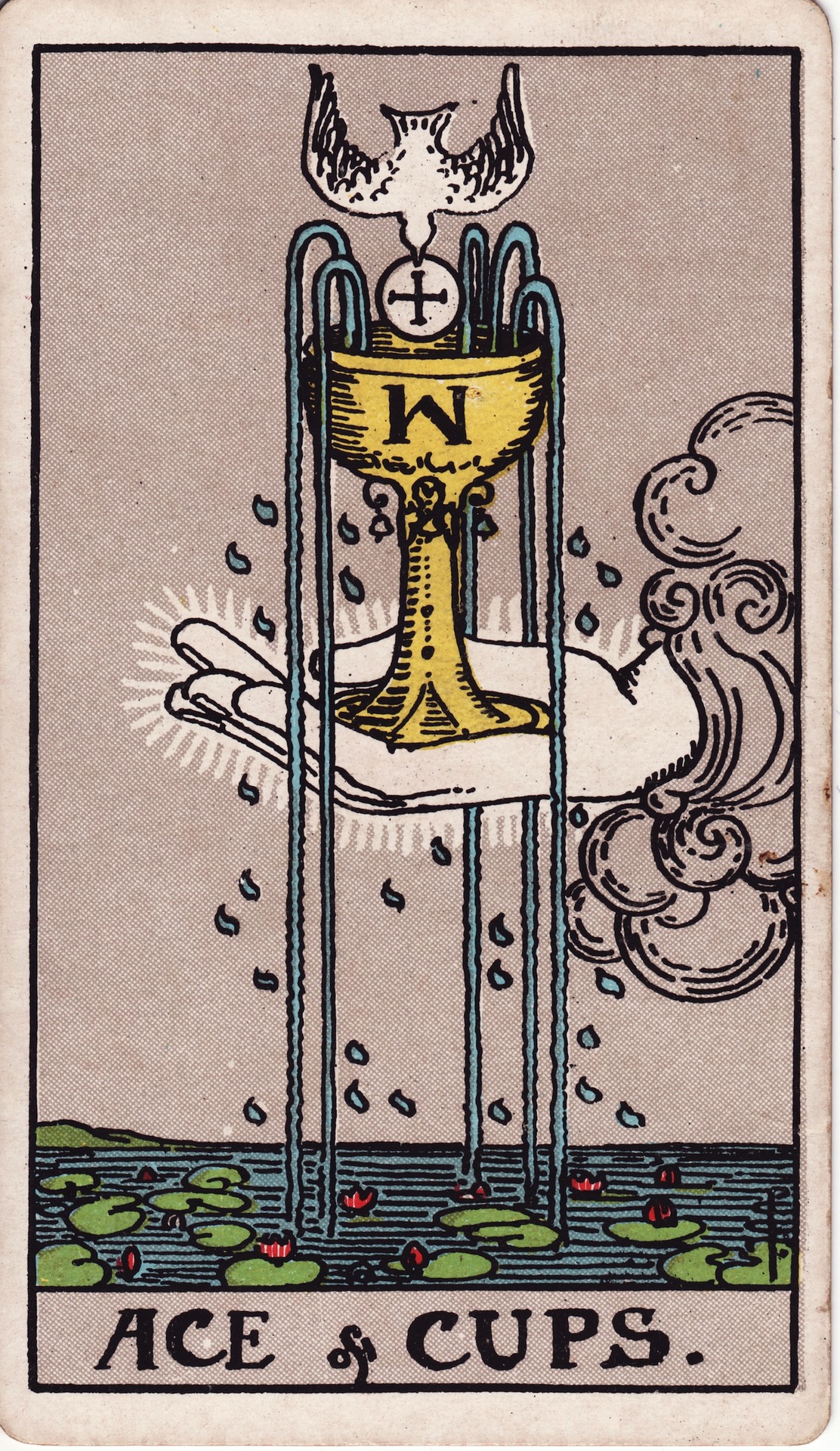
Corresponding Tarot Card: Ace of Cups

The Ace of Cups is the point of emotional origin. It signifies the start of a new emotional journey, the experience of being deeply—intuitively—in touch your emotions, and with clearing the fog out of emotional wounds. When the Ace of Cups pops up in a spread, it can point to a spiritual spark, or the first flash of divine insight. The cup is full, so the heart is awakened.

Saint Francis of Assisi is very much the Ace of Cups. First and foremost, he led from a place of love and was greatly in touch with his emotions. He didn’t go about trying to earn the love of others; he simply accepted it and received it, and that felt natural to him. Peace was his trademark. He understood that reacting to a particular situation from a place of anger or fear was useless. In serenity, he found magic. Though he chose a life of poverty, he saw abundance in the earth and in nature. He started the Franciscan Order with the intention that it be a cup always full, a cup flowing and overflowing with love, a cup that nourishes the earth and is held up to honor the sky. The Ace of Cups is also the womb where that good idea, backed by emotion, starts to glow.

Pairing the Ace of Cups with a holy card of Saint Francis of Assisi forms a powerful portal. Is there a new relationship in your life? Do you want to forge a stronger relationship with yourself or someone else? What about peace? Peace is wellness on every scale, but sometimes cultivating it can be challenging. Sometimes peace is evasive, and maintaining it is the goal. In our own lives, emotional fulfillment is priceless. Fulfillment can come through work or volunteering or studying. It is not enough that we like our jobs—we must find purpose in our work, or in a chosen path.  Whatever the case, meditating with Saint Francis is a powerful way to begin any spell or ritual. If you don’t have a holy card of Saint Francis, use the Ace of Cups, or carry it with you.

Sacred Offerings: Planting a tree, tending a garden, any acts of environmental stewardship; cultivating your favorite herb or flower; leaving a chosen flower at queer historical site; adopting a pet from a shelter; if you can’t adopt, foster one or volunteer at a shelter; feed stray animals; donate clothing to a shelter or mission; give yourself the gift of peace by spending a day—or even a few hours of a day—alone, with meditation and healing as your goal.   

Strip the Old, Raise the New: A Ritual with Saint Francis of Assisi

Who do you want to be in this world? What kind of work do want to do? Is there a particular vocation that makes your soul sing? Maybe you want to join the high ranks of management at a financial firm. Maybe you want to teach kids. Maybe your idea of fulfillment is parenthood, or working or volunteering as a peace advocate or environmental steward. In this ritual, you’re going to work with Saint Francis and take the transformational step that he took when he stripped himself of his clothing and publicly dedicated himself to serving the poor.

Shedding your old clothing with intention is a powerful act—much like shedding old skin. It sends a clear energetic message into the universe. You have made a decision and are now acting on it.

For this ritual, you will need the following:

  • 1 white candle and a candleholder
  • Matches or a lighter
  • A notebook or journal and a pen or pencil
  • Clothing that represents who you want to be. When you envision yourself living your best life, how are you dressed? Do you need a suit of a particular color? Working boots? Dancewear because you aspire to be a performer? Are a calculator or carpentry tools a part of the work you want to be doing? Gather the clothes that represent a goal you’re working toward.

Start by choosing a place where you will not be disturbed. If it’s your bedroom, set the needed items and clothing aside and sit down. Get comfortable. (However you’re dressed is fine because the clothes on your body right now represent who you are right now). Take deep breaths. Get into a calm place.

When you feel at ease, take the white candle in your dominant hand and close your fingers around it. Now close your eyes again and begin visualizing the end result of your goal. If you want to be a teacher, see yourself in a classroom or walking across a campus. A journalist? See yourself writing at your laptop. You get the point. Now think of the clothing you selected to represent this new version of you, and see yourself wearing those clothes. Once that image is clear in your mind, open your eyes and blow on the candle. Set the candle in the holder. Place the holder on a firm surface. (This does not have to be an altar—later on in this book, you’ll learn how to do that).

Sit before the candle and continue breathing deeply.

Light the candle. Say the following:

Saint Francis of Assisi,

You knew in your heart and soul the path you wanted to follow.

You had the courage and strength to pursue your vision

when the world around you seemed determined to stop you,

when the world tried to force you to conform,

when people looked past your authenticity

and saw instead who you were expected to be.

You revolution was peaceful but sure, disruptive but unshakeable.

Be with me now, Saint Francis, as I decree to the world

The person I want to be, the person I am meant to be,

The person I am.

Stand up and slowly strip your clothes off. Cast each article of clothing to the side—this is the old you, the person you are shedding, including every doubt, fear, and unhealthy belief that kept you rooted to a spot in which you no longer wish to stand. Strip it all off.

When you are standing unclothed before the candlelight, return to your visualization and see the person you are stepping into and becoming. Saturate yourself in the feeling of being that person and working that job or honoring that vocation. In changing your emotions about the person you want to become—going from uncertainty and doubt to confidence and happiness—you are making a silent decree to the universe. Ask Saint Francis to be with you in these moments.

When you feel ready, put on the clothes you selected earlier. Dress slowly and happily, with intention and gratitude. Thank yourself first—for holding the vision of your goal, for deciding to perform this ritual, and for committing to this new version of yourself. Don’t forget to gather any items that go with your outfit and keep them close. Then say the following:

Saint Francis, gentle revolutionary and partner in magic:

Take my hand.

Be with me as I walk with confidence and determination

into a world I peacefully conquer,

challenging misconceptions, righting injustices, being the voice of the forgotten.

Being my own voice, and speaking my own truth.   

Sit down and spend time writing about your new self in the soft glow of the candlelight. What plans do you have? What are your next steps? Know that Saint Francis of Assisi walks with you and stands at your side whenever you call out to him.

Let the candle burn down. Collect any remaining clumps of wax and put them in a small pouch or wrap them in a paper towel. Now go outside, into the world, dressed as the person you are meant to be. Feel those feelings again. Notice who looks you. Make note of any synchronicities. Dispose of the wax in water or in the ground.


Hildegard of Bingen: Visionary, Feminist, Badass
The Saint of Sacred Rebellion

For witches and magical practitioners, Hildegard can be a partner in many, many ways because she was truly a master of many, many things. She is the ultimate visionary. A writer. A composer. A theologian. An herbalist. An environmentalist. A teacher. An abbess. An artist. All artistic disciplines fall under her patronage. So do any endeavors related to science and medicine. Those who practice holistic medicine or work in the body/mind/spirit realm should feel especially comfortable petitioning Saint Hildegard. In addition to being a genius in all of the ways mentioned above, she was also authentic and deeply committed to her values, ideals, and personal mission. She did not back down, even when she was ordered to stay quiet. She was an activist and a defender of those who couldn’t speak on their own behalf or were too scared to do so. While she certainly did govern a monastic community of women and abide by the edicts of the Catholic Church, she railed against rules and that suffocated her creativity and broke down walls built in the name of conventional ways. Are you in leadership position, or do you aspire to a leadership position? If so, work with Hildegard. She was well ahead of her time, and her brilliance and courage are unquestionably queer.     

Magical Attributes

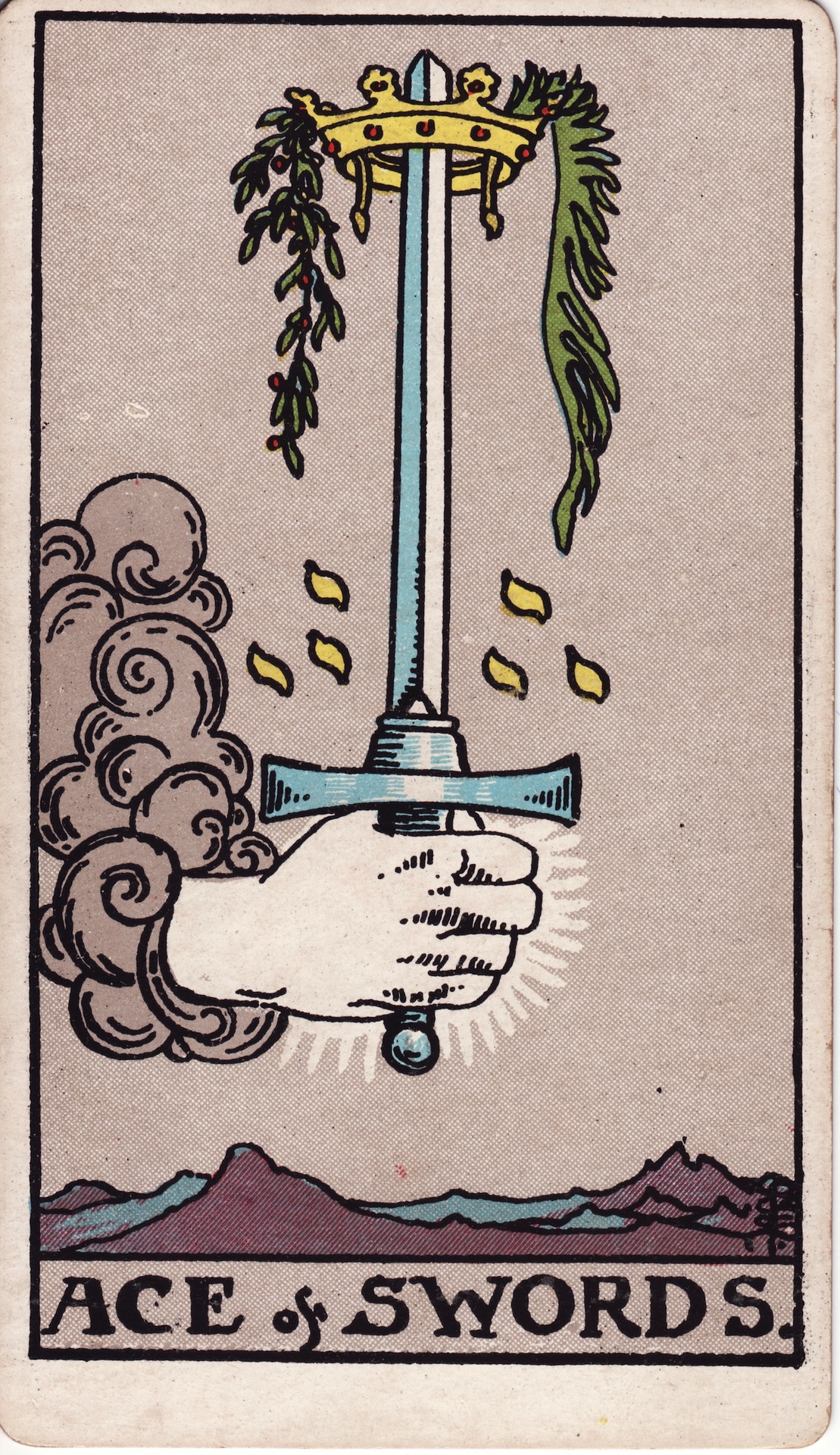
Corresponding Tarot Card: Ace of Swords

It’s a powerful image: a hand emerging from a cloud, its fingers wrapped tightly around an upright sword; hanging over the sword’s tip is a small crown, and emerging from the crown are strands of laurel. Several words come to mind here—victory, courage, swiftness, strength, skill—and each one is correct. The Ace of Swords represents intellectual power, decisiveness, and clarity. It also heralds a time of breakthroughs and excellent communication.

Many tarot cards can be attached to Saint Hildegard because of the sheer breadth and scope of her life and work, but the Ace of Swords is, in my opinion, a perfect match. Why? First, because Hildegard had an extraordinary mind; her intelligence and creativity were next-level genius. Composing music. Writing books and letters and other correspondence. Lecturing. Governing. Defending herself and her visions. All of it boils down to one fact: Hildegard experienced one luminous breakthrough after another. Her “vision” transcended the earthly realm. She  saw several other dimensions and embraced those revelations, no matter how strange they might have seemed to her.

And no matter how any of it might have made her look to her male superiors. Hildegard was a sword—sharp and swift, capable of providing protection or inflicting pain. When it came to defending herself, her work, or her monasteries, she was loud and gutsy. Confrontation? Not a big deal to Hildegard. She went up against people who sought to break her down or punish her for being disobedient. But her disobedience was faith—in herself and in her mind. Saint Hildegard is a synonym for innovation and mental action. She was limitless.

Use the Ace of Swords whenever you work with Saint Hildegard. Her patronage is vast, and the miracle you’re seeking can likely benefit from her brilliant influence. Anoint an Ace of Swords in Saint Hildegard’s name and carry it with you—to auditions, job interviews, meetings, dates, family functions, silent retreats, concerts, writing seminars…an Ace of Swords dedicated to Saint Hildegard is a powerful spell in and of itself.

Sacred Offerings: Gather herbs and make a sacred sachet in her honor; write music or play it to honor her; sing her praises; spend time in nature and do the work of “greening”—enhancing God’s natural beauty through gardening or cleaning up a neglected area, especially an area that should be grassy and green; dedicate a crystal or stone to her; learning alchemy, especially as it creates to holistic wellness.

Publick Universal Friend: Soul Has No Gender

For witches and magical practitioners, Publick Universal Friend can be petitioned for all matters relating to mediumship, trance states, and magical workings having to do with rebirth. The true story of America’s genderless prophet is one of death and rebirth, but also one that illustrates the fluidity of gender from a spiritual perspective. Queer witches and magical practitioners who are thinking about transitioning, or are in transition, should consider working with PUF, as they lived at a time when the very concept of being “genderless” was not met with even a modicum of understanding, let alone compassion. Yet PUF persevered and carried on with their mission. If you have family members or friends who are thinking about transitioning, or are in transition, consider introducing them to PUF. Anyone working as a death doula, or who’s studying near-death experiences, will also find a powerful friend in PUF.

Magical Attributes:

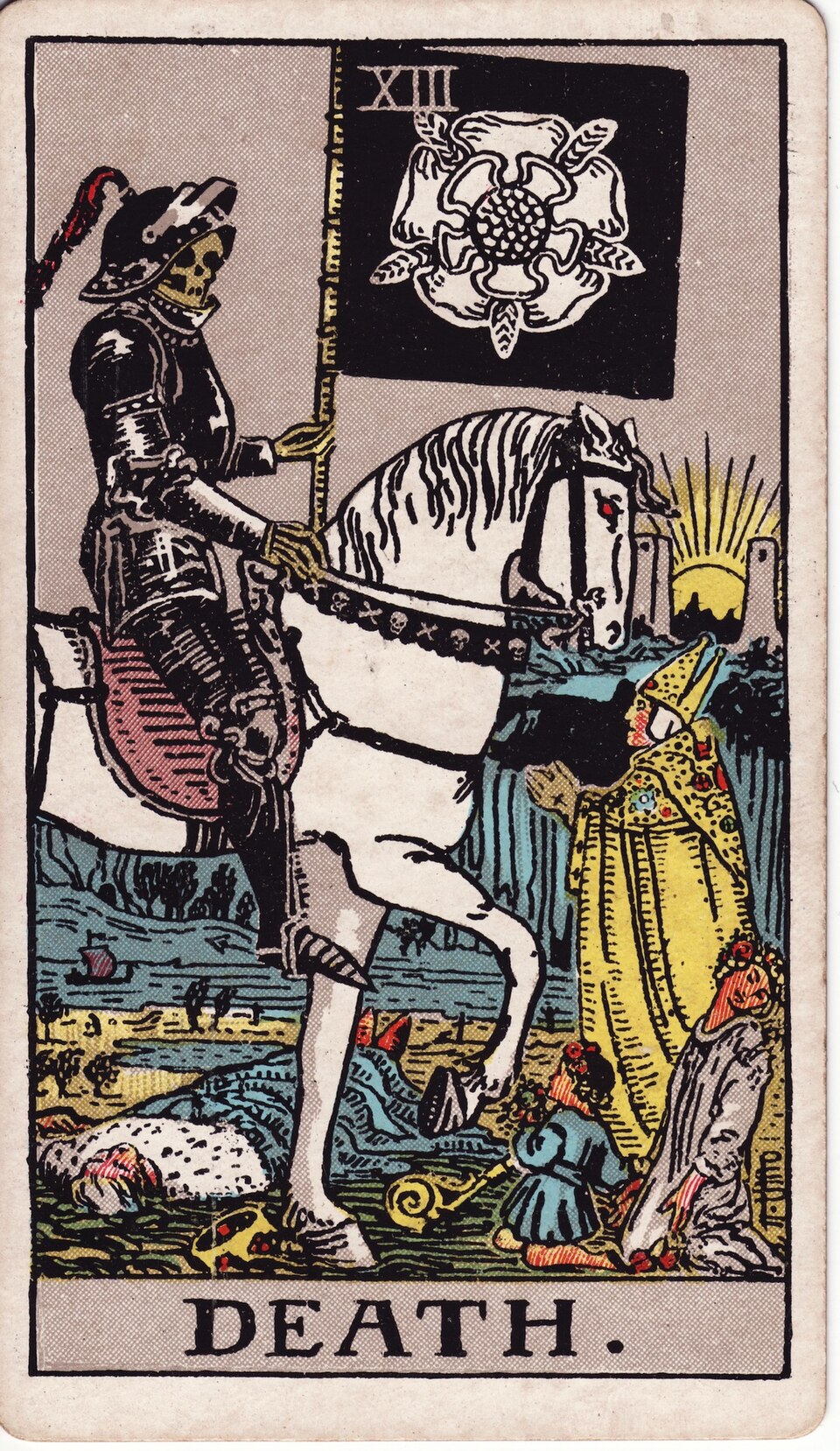
Corresponding Tarot Card: Death

One of the most misunderstood cards in tarot, Death often strikes fear when in pops up in a reading because people generally believe it’s a prediction of physical death. That’s extremely rare. The Death card represents endings and beginnings, death and rebirth. One stage of life—be it a person’s career, social circle, marriage, singlehood—has come to a definitive end or is about to end, and endings aren’t always swift and easy. Losing a job or a home or a relationship can be tough, both physically and emotionally, and it often requires a period of mourning. Grief brings about confusion and anger and self-doubt, but when we get out of our own way and surrender to grief, we find ourselves reshaped and resculpted and ereinforced and, ultimately, reborn. Countless people will attest to the transformative power of their journey through a difficult period of life; this is because grief and endings bring us into a liminal space, a womb between the worlds, where we are birthed into a new stage of life. What follows is clarity—we see with our inner eye what we couldn’t see before, and we step into a new purpose.

Once upon a time, the prophet who would become Publick Universal Friend (PUF) was a woman named Jemima Wilkinson. She became ill and “died” in a very particular sense of the word: her physical body remained, but her identity as a woman named Jemima was no more. Reborn after a period of confusion, doubt, and struggle, the person who was Jemima could no longer identify with a gender and, in claiming the name Public Universal Friend, they awakened a region of the soul that very few of us even know exists. PUF represents the power of the Death card in all of its variations, but PUF is also an example of how the concept of death can be lead us into a new life entirely. In PUF, we see Death not as an ending but as a gateway, a portal, to the next phase of our soul’s journey. Interestingly—and quite paradoxically—Death can act as a lifeline when we allow it to; it can rescue us from the depths of stagnancy and emotional decomposition. Death reminds us that consciousness—soul—has neither a gender nor a color. When we are struggling through challenging times, Death will show us that a quick exit from the shadowy depths of uncertainty isn’t always in our best interest; sometimes, in order to fully heal, we need to walk through fire or stand still as the ground beneath us rumbles and shifts and threatens to swallow us whole; we need to flatline before we can grab hold of the lifeline.

Combining the Death card with a spell, ritual, or prayer to PUF will assist anyone who is going through a deeply unsettling time or struggling with grief. If you’re at the very start of your grief journey and feel frightened, ask PUF to accompany you—they are, after all, the “universal friend” and will take your hand if you offer it. If you find yourself reading this and feel as if you’ve been stuck in grief or a downward spiral, PUF will show you how to connect with your purpose and carry it forward. PUF’s transformation occurred during and after their illness, while they were in a coma-like state, or what might have been a trance state, so anyone who works with mediumship, near-death studies, as a death doula should call on PUF.

Sacred Offerings: A glass of water; a handful of seeds; wildflowers; intentional acts of kindness, and being the “universal friend” to anyone in need; sitting in meditation or trance; dedicating an hour a week to the study of gender fluidity; drawing a lotus (because it is a fairly common symbol of transcendence and rebirth); a moonstone, as it is associated with the energy in motion and the cycles of change.